
There will be a vote on whether to pass a proposed block schedule for the 2026-27 school year on Feb. 11, science teacher Glen Barrett said. Teachers were informed first as a matter of procedure and to get their opinions; if students were informed at the same time as teachers, it would have been chaos, he added.
The fact that the proposal drifted through the student body means that there is enough time for people to process the schedule, Barrett said. If the vote fails, then the school will move on, but if it succeeds, then students will have had a little forewarning, he said.
“The Wednesday before (Jan. 28), it was brought up for questions (at a meeting),” Barrett said. “I wouldn’t say (it was) proposed, as much as we were informed about the potential, and we as departments discussed it all at the same time to avoid it drifting out.”
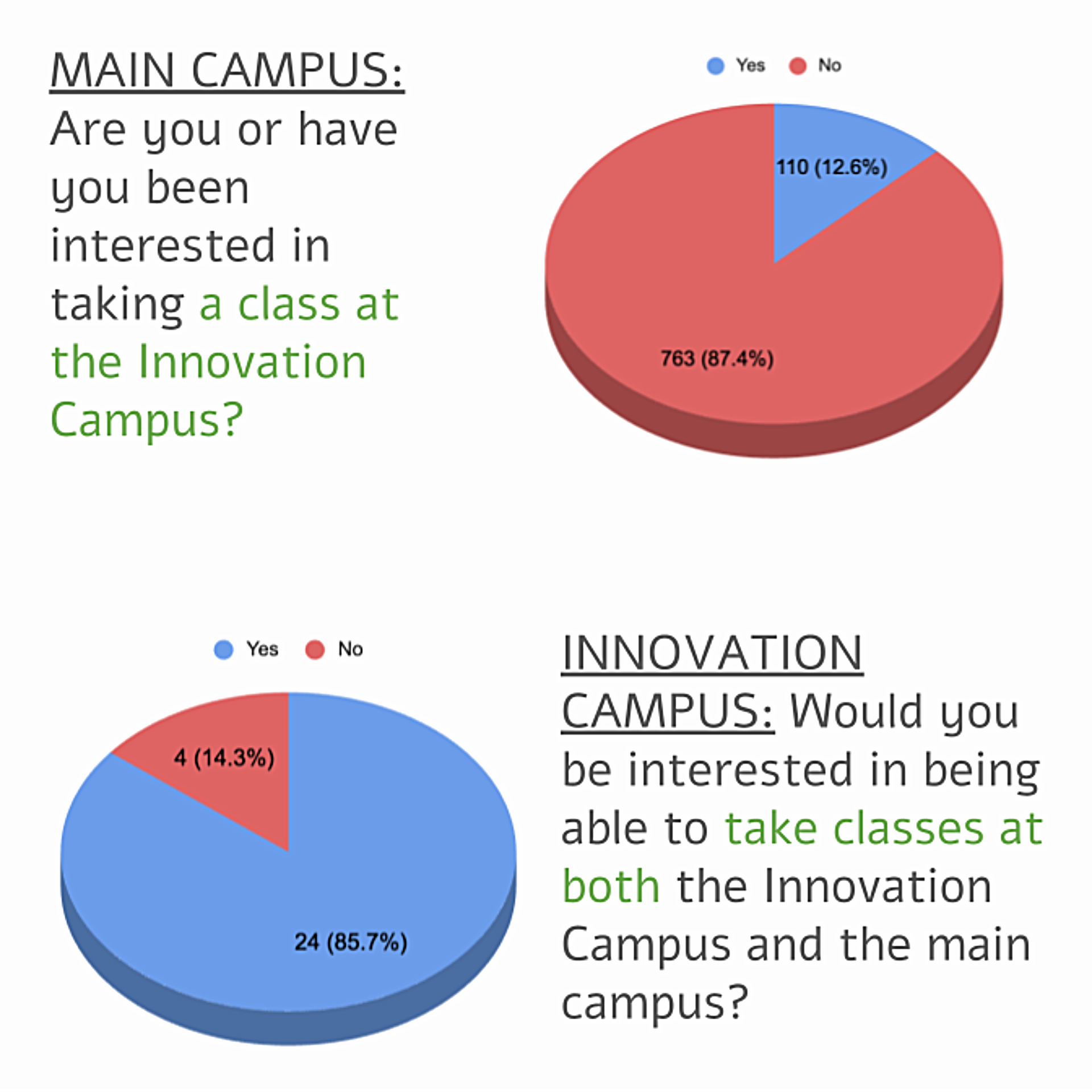
According to a survey done by The Union, 781 out of 843 students (92.6%) from the main campus have heard of a potential switch to block scheduling. Twenty-four out of 28 students at the Innovation Campus (85.7%) from the survey responded the same way.
Only teachers are voting on the proposal, Barrett said. It’s in the contract with the teacher union and the classified union that teachers are the ones who vote on school bell schedules, and the district deals with the calendar, he said.
“We vote for the scheduling because in the end, it comes down to classroom curriculum and student needs, and we have the best grasp of that from a curriculum point of view,” Barrett said.
Even though the Innovation Campus is on a modified block schedule, they are also changing their schedule, Barret said. The primary motivation for a block schedule is the Innovation Campus, he added.
“They (the district) are trying to unify the campuses to be one high school, because right now, it’s clearly not, because people aren’t traveling back and forth,” Barrett said. “It’s a satellite, secondary high school at this point, and the attempt is to make it a high school, not a pod.”
According to the same survey done by The Union, 110 out of 843 students (13%) from the main campus are or have been interested in taking a class at the Innovation Campus. 24 out of 28 (85.7%) Innovation Campus students from the survey would be interested in taking classes at both the Innovation Campus and the main campus.
Many students at the Innovation Campus are interested in taking classes offered at the main campus, freshman and ASB president of the Innovation Campus, Alexza Perez, said. Teachers at the Innovation Campus support the proposed block schedule because it gives students from the Innovation Campus the opportunity to take AP classes at the main campus, which are not offered at the Innovation Campus, Perez said.
“I think a lot of the students are also interested in the variety of electives offered at the main campus,” Perez added. “Since we are the extension and we are engineering-based, and some of the students are here for our block schedule, we don’t have as much of a variety of electives. So I think a lot of the students are mostly excited about the elective opportunities and the AP opportunities.”
Students at the Innovation Campus have been advocating for a wider variety of classes as well as increasing access between both campuses, Perez said. Currently, the Innovation Campus feels disconnected from the main campus, she added.
“I feel like allowing these students to bus back and forth would create more of a closer dynamic,” Perez said. “It would just allow for there to be different personalities (on campus), and for people to be able to create new friendships and bonds.”
English teacher Tonichi Lorenzana believes that the current draft of the proposed block schedule makes sense, given what the goal of it is, Lorenzana said. Because the schedule has not been put into place, it is hard to say what will go smoothly until it is actually implemented, he added.
“But in terms of what our goals were, I think the schedule makes a lot of sense because it does allow for flexibility for students and staff, the opportunity to go back and forth between the campuses,” Lorenzana said.
As a member of the Site Leadership Team — whose role is to be the intermediary between administration and their respective departments — Lorenzana was presented the proposal several weeks ahead of when the community at large was made aware, he said. At that point, the plan was not what it is now, he added.
“There were several iterations of the schedule that eventually got us to where we landed on the current one that has been proposed,” Lorenzana said. “That entire process took weeks. And then once that final version that we’ve looked at was proposed, that was maybe a little more than a month after the initial meeting.”
Whenever information like this is brought up, it needs to be done fairly quickly so it’s still top-of-mind for the receiver, and there has been some time for teachers to kind of sit and digest it, Lorenzana said. A week was given after the finalized version of the schedule was proposed for staff members’ questions to be collected, and then those questions were answered by administration (at a staff meeting on Feb. 4) during a Q&A session, he said.
“It is pretty quick in the sense that it had been a week, but it’s been kind of like a structured and guided week where there were opportunities for these kinds of questions,” Lorenzana said.
During a meeting between teachers and administration on Feb 4., the school administration gave a presentation outlining the reasons behind the proposal, how the proposal solves several issues, the timeline, and how long teachers will get to work on their curriculums, Barrett said.
“I have never actually taught block (scheduling), but I’ve been through a lot of training for it,” Barrett said. “It’s a lot to rewrite, to make sure it’s not like, ‘Here’s 90 minutes of one thing.’ It’s got to be sectioned out, or ‘Here’s some time to do this and that,’ and that can be hard, not necessarily just on a class level, but on a full 180-day level.”
Awab Ibrahim, a senior at the main campus, took a dual enrollment class offered at Innovation Campus, he said. Ibrahim understands that the block schedule is a good way to bring more people to the Innovation Campus, but he worries that not enough students would take classes at Innovation to make the schedule change worth it for the entire main campus, he said.
“On top of that, I wouldn’t personally agree to it (the block schedule) because, let’s say one day you’re sick, right?” Ibrahim said. “That class is 90 minutes long. If you take a lot of STEM classes — biology, math, chemistry — if you miss one day of class, you’re going to be severely behind. Even right now, if you miss an AP class, you’ll be behind. But it’s more recoverable.”
Additionally, one of the big drawbacks to taking a class at the Innovation Campus was the transportation to and from the main campus, Ibrahim said. Transportation issues would absolutely affect students, especially if they are in the middle of taking care of things, such as waiting in the nurse’s office for help, he added.
“I think if you’re late to a period, then you’re going to miss a lot of class until the next bus comes back, which is definitely going to happen,” Ibrahim said.
Block scheduling was raised to a vote about 10 years ago, but did not pass, Lorenzana said. It was surprising to know that block scheduling has been in the works and is a potential for the future, but over time, it makes sense why it was proposed, Lorenzana said.
“Several things really try to take into account things for the students, including the hope of having less homework each night for students, so that they’re not sitting through and trying to do six periods worth of homework each night,” Lorenzana said. “Also, (we’re) trying to be a little bit more in alignment with most of our Bay Area School peers because nearly all of them are on a block schedule, or at least some form of a modified block schedule.”
The Innovation Campus is currently on a block schedule, with three periods of 90-minute classes a day, Perez said. The proposed block schedule will follow a similar schedule as the one that the Innovation Campus currently has, she added.
“I think that the 90-minute periods are extremely helpful, especially since it allows students to focus on less classes per day and give their full, undivided attention to one class,” Perez said. “It just allows more time for students to get stuff done during class, and it eliminates a lot of work, like homework.”
Ibrahim believes that while students may not get to vote, they should at least have a say in the proposed block schedule, he said.
“I do think it (student opinion) should be taken kind of seriously, but I know there’s a lot of students who just don’t truly understand it (the block schedule), so I think it shouldn’t be the deciding factor, but it should be looked at what the students want,” Ibrahim said.
In response to how a block schedule would affect their learning, 455 out of 842 (53.8%) main-campus student respondents said “Negatively,” 217 (25.7%) said “Not much,” and 171 (20.4%) said “Positively.” In response to how a block schedule would affect their after-school activities, 447 out of 843 (53%) main-campus student respondents said “Negatively,” 272 (32.3%) said “Not much,” and 124 (14.7%) said “Positively.”
Social studies teacher Lauren Byler likes the idea of students having more options over what classes they can take, but a major point that was brought up during department meetings was whether there is any science-based data that shows that block schedules help with student success, she said.
“I know for a fact that there is science-based data that says that students need to socialize and have to be involved in clubs; there’s lower rates of things like teen pregnancy and delinquents as a result of students being involved in organizations,” Byler said. “I think busing students to and from campuses could cause a problem in terms of students having access to clubs and access to social opportunities.”
English teacher Gregory Campeau was more uncomfortable with the way block scheduling was presented rather than the proposal itself, he said. The proposal was presented as a way to deal with issues of imbalance between the main campus and the Innovation Campus in terms of the number of teachers and students, Campeau said.
“I think it’s frustrating to a lot of teachers because the perception was that this was something we’re being urged to accept in order to deal with a problem or an issue that we had no hand in creating,” Campeau said. “I would distinguish between the content of the proposal and the context of the proposal.”
One of the big issues about the block schedule is how it will be decided which teachers will teach 1st-6th period versus which teachers will teach 2nd-7th period, Byler said.
“They (administration) tried to present it in a very democratic fashion that seems fair, but at the same time, I know when I was on the scheduling committee before, that was a huge reason for people voting yes or no,” Byler said. “If I say that it’s my kids and my child care, then do I get priority? But then, isn’t that discriminating against someone who is single (with) no dependents? Or does seniority play into this? I know they’re going to try their best to meet the needs of people, but I don’t think we know the numbers of how many people are interested in one through six versus two through seven.”
When he initially saw the schedule, Ibrahim was very confused by it, Ibrahim said. The proposed block schedule would be a big change for the main campus, he added.
“Obviously, you’re going to have to adapt,” Ibrahim said. “I don’t think it’ll be very easy to understand the schedule at first, but probably within a couple months (students will adapt). And of course, the freshmen, it’s their first experience, so they’ll adapt.”
The problem with making a decision is that there is no perfect decision, Campeau said.
“So the question is, ‘Is it at least slightly better than what we have now in every single way?'” Campeau said. “I think it’s very hard for an individual teacher to think through that, you have to think through that in a group of people who are all thinking about this question in different ways.”