
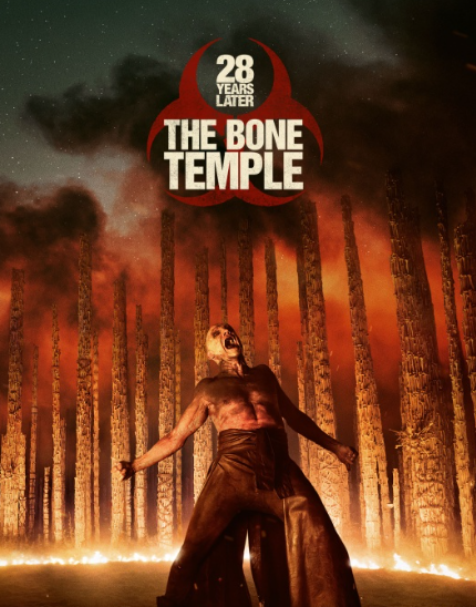
On Jan. 16, nearly 24 years after the release of the 2002 zombie hit, “28 Days Later,” “28 Years Later: The Bone Temple” was released. It came out exactly 28 weeks after the movie’s prequel, “28 Years Later.” The prequel is set in an isolated England, 28 years after the first outbreak of the “rage virus” in the franchise’s original film. The latest film picks up the storyline left by its prequel, introducing the main antagonists, the “Jimmys”, and brings together various plotlines beautifully in what is the most “metal” scene of the entire franchise.
Actor Chi Lewis-Parry, who played the film’s main “infected”, Samson, gave an emotional performance. Though Parry had few speaking lines and mostly roared or growled throughout the film, he made the audience feel empathetic for Samson, balancing his monstrosity with humanity. Samson’s journey of growth, accompanied by the character Dr. Kelson, played by Ralph Fiennes, sets up Samson as an important character in future films.
The film also gives audiences insight into the “rage virus” and how the initial outbreak affected both the infected and the uninfected. The movie’s main antagonist, Jimmy Crystal, played by Jack O’ Connel, was introduced in the previous film as a little boy at the time of the initial outbreak. In “The Bone Temple,” Crystal is a Satan-worshipping lunatic who leads a band of like-minded survivors, coined as “the Jimmys.” Connel’s portrayal of Crystal was compelling and showed that in an apocalypse, humans are just as, if not more, dangerous than zombies. A similar sentiment was emphasized in the first film of the franchise, “28 Days Later”.
Fiennes’ character, Dr. Kelson, held the spotlight for a large part of the movie. Probably the most memorable and “metal” sequence of the movie featured Fiennes’ character in an ear-splitting scene that led to the film’s final showdown. Fiennes’ role balanced the otherwise dark and gory atmosphere of the movie with the light and kind disposition of his character.
The film’s cinematography does an excellent job of making you feel as though you are really in an apocalypse. The wide shots of open, empty green land were as isolating as they were beautiful. The structures of the titular bone temple were shot in a way to emphasize how foreboding and massive they really are.
The film boasted an impressive display of music, including the original score from “28 Days Later” in the end credits. The dark atmosphere of the movie was enhanced by the choice of music, including “Everything in Its Right Place,” by Radiohead. An appreciated detail was that all the music from the film is from before 2002, when the first movie was released, and the first outbreak of the virus occurred.
The movie’s end featured the return of a beloved character, played by Cillian Murphy in the first film, “28 Days Later”. “The Bone Temple” sets up several plotlines that audiences will eagerly look for in future films. For fans of the 28 Days Later franchise, “The Bone Temple” will not disappoint. New viewers will be captivated by the intensity of the characters, and how each responded to the horrors of the apocalypse.