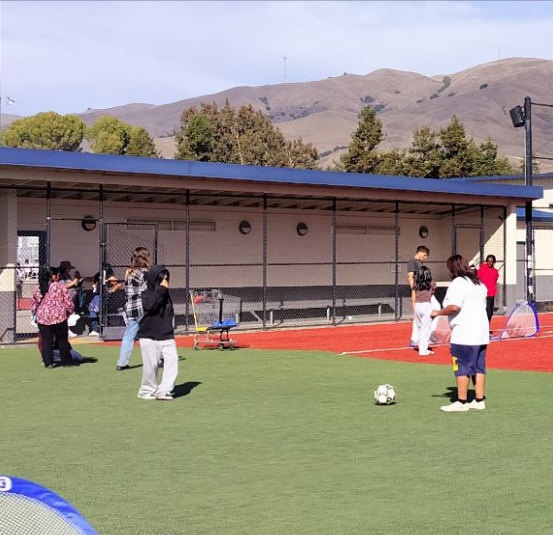
The new Inclusive P.E. Practices (IPP) class aims to give special education students the opportunity to interact with general education students while also enabling them to be physically active, Physical Education (P.E.) department lead Kristina Giles said. General education students have the opportunity to work with the Community Based Instruction (CBI) program by socializing and assisting the special education students in the class, she said.
Last year, the P.E. department had around thirty CBI students in one class period, Giles said. This situation caused an overall dangerous environment for neurotypical students, as the large number of CBI students was difficult for a single teacher to manage, she added.
“I called for a meeting and had several people involved from the district to our MHS site to talk about ways that we could have a better P.E. program that was safer, as well as giving the kids a better P.E. experience,” Giles said. “One of the options I came up with was to have the CBI classes come separately – one class, third period; one, fourth; one, fifth; and then for us to recruit student helpers to assist in running the class.”
The IPP class does not focus on just physical education, Giles said.
“We work on socialization and we try to get our students to communicate,” Giles said. “(The IPP class) is about giving them time to work with students outside of their classroom. We want them to be physical, but it’s more important that they are interacting with students and just having a regular high school experience, since they don’t always get (to be) in their classroom five periods a day.”
The P.E. teachers are mainly looking for seniors and juniors to be volunteers, Giles said. Students have to be at a certain level of maturity in order to be a part of the IPP class, she added.
“Most of the CBI students are autistic and nonverbal,” Giles said. “I feel that by junior-senior year, you’re a little bit older, you have a little bit more patience, you’re just more mature. You have to pay attention to your buddy 100% of the time…Your attention is on your buddy and making sure you’re helping them.”
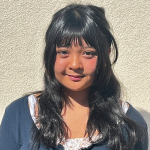
Senior Elizabeth Ashley is a part of the IPP class, she said. The class features simpler versions of different sports, and there are some occasions where the class focuses on other activities instead, she added.
“We focus on P.E., so we do regular sports just like P.E., but we modify them so that it accommodates their needs,” Ashley said. “A lot of them (CBI students) can’t stay in the sun, or they can’t play regularly, so we just accommodate that. It’s just modified versions of P.E.; we also sometimes do other life skills, since it’s a community-based class.”
Despite the class being a P.E. elective, it does not offer any P.E. credit, Ashley said.
“It’s a pilot class; the P.E. teachers intend to actually do a CBI class,” Ashley said. “It’s not for PE credits… It just hasn’t gotten a lot of recognition. They’re trying to promote the class.”
The IPP class enables student volunteers to become more empathetic, Ashley said. It provides the volunteers the opportunity to gain a new life skill, she added.
“Especially since the CBI kids are separated from us (general education students), you get a different perspective, and you learn about their disabilities,” Ashley said. “You learn how to adjust and be flexible based on other people’s needs.”
The P.E. and special education departments work closely together, special education teacher Gary De Guzman said.
“All of our students take P.E. classes,” Guzman said. “We all help them to participate in what basically the students in the general education curriculum are doing.”
Each CBI student has a buddy to accompany them throughout the period, Guzman said. The social aspect of the class is what differentiates it from other electives, he added.
“It’s almost like another bridge to help access what it is that the students are learning,” Guzman said.
Guzman observes his CBI class during P.E. whenever he is available or needed, he said. He gives advice and suggestions on how to work with certain students, he added.
“The volunteers, when I observed, worked really well with our kids,” Guzman said. “They were very patient and very understanding.”