
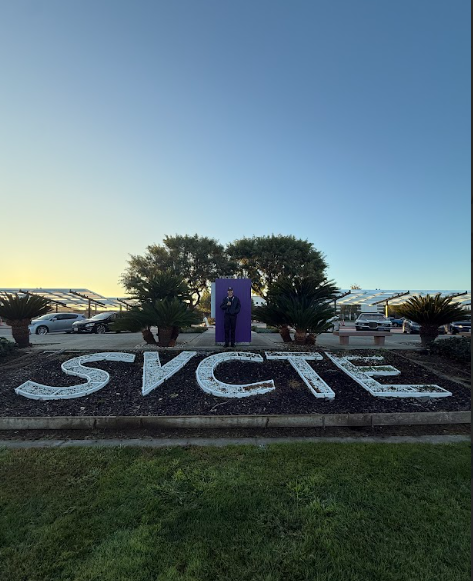
Some students take advantage of courses offered at The Silicon Valley Career Technical Education Center (SVCTE) in San Jose. This program, available to seniors at MHS, offers specialized technical education that prepares students for college and their future careers in careers ranging from dental assisting to law enforcement to firefighting.
Senior Logan Nixon is currently in the Fire Science and First Responder program at SVCTE. The program operates on either a morning or afternoon schedule, and Nixon, who is on the morning schedule, arrives at school at 6:30 a.m. and returns in time for 4th, 5th, and sixth period, he said.
“There’s a designated bus that helps you there, so it’s easy,” Nixon said. “All you have to do is show up on time.”
Nixon had already been training to be a firefighter for 5 or 6 years, and thought the SVCTE program would be a good program to join and gain experience from, he said.
“My favorite part of the program is how hands-on it is,” Nixon said. “It’s hard for me to learn in an environment where only information is being fed to me. In SVCTE, we get experience, and we don’t only read books.”
A typical day in Nixon’s program starts at 7:30 a.m., when he begins with classwork, hands-on lab work, and then physical training, he said.
“For learning CPR, we would watch a video on it, read a little bit in the book, and then we would go practice it in the lab,” Nixon said. “Then, we would do a little bit of physical training, like running and push ups,” Nixon said.
SVCTE gives him experience that he wouldn’t have otherwise gotten, Nixon said. Being in the program has taught him a lot more compared to his friends who also want to work as a firefighter and emergency medical technician (EMT), but aren’t in SVCTE, he added.
“I would definitely recommend SVCTE to anyone who’s interested,” Nixon said. “There’s a lot more than firefighting. There’s welding. There’s an auto shop. I recommend it for anyone who’s interested in going to any line of work.”
Senior Ryan Umana Lopez is in a program called medical assisting, where he has hands-on training in such skills, as taking vital signs and drawing blood and giving injections.
“Normally, we take two vitals on two patients in the class,” Lopez said. “We take pulse, respiration, blood pressure, oxygen saturation, temperature, height and weight. We’re also starting to do eye exams on how to test colorblindness. We also have to be very professional on how to add chief complaints, date of birth, full name, why they came in – things like that.”
Career wise, Umana would like to major in biomedical engineering, then go to medical school, Lopez said. In his program, the students are encouraged to and taught where to find internships based on the speciality they want to go into, he added.
“Right now, I’m researching urgent care, as I want to experience everything and be in a fast-paced environment,” Lopez said. “I have an interview coming up with Silicon Valley Medical Center. I have another interview in January for Action Urgent Care. We will definitely be seeing actual patients and doing everything that we have been trained for.”
Fatima Kakaub studies medical science/health careers at SVCTE. She plans on being a doctor, with a specialization in general, or family medicine, Kakaub said.
“This course teaches a lot of the fundamental medical practices and procedures that you’ll have to know regardless of where you go in the health care field,” Kakaub said. “So I think it sets a strong foundation for me.”
Many of the students in her program are from other schools in San Jose, Kakaub said. There is a sense of community between the people in her program, as they are all going for a similar career field, she added.
“When you walk into the classroom on the first day, you really don’t know anyone in there,” Kakaub said. “But it’s really interesting to get to know people and to see how different people are all trying to do the same thing or go into a similar field.”
One of her favorite aspects of the program are the professors, Kakaub said.
“The teachers there really care about uplifting you and making sure that you can really reap the benefits of their class, and SVCTE in general,” Kakaub said. “They’re really helpful, and they really want you to do well.”
The program itself is free, creating less of a burden on students, Nixon said. He received numerous certifications, including a CPR certification, that he otherwise wouldn’t have received for free.
“I think people should really take advantage of how it’s free and try to join SVTCE if they can, just to get ahead and be more prepared for college,” Nixon said. “I know a lot of people are worried about not passing college, and I think SVCTE has given me more confidence that I’m going to pass college.”