
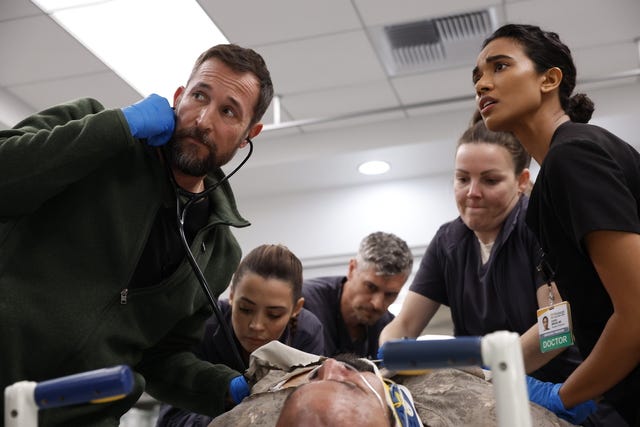
Many real medical workers deemed “The Pitt” Season 1 the most realistic medical drama in 2025, and as of January 8, 2026, the show returned on HBO Max with intentions to release 14 more episodes weekly until April. Each episode is an hour of Doctor Robby’s (Noah Wyle) shift, guiding viewers through the chaos of the emergency room and the various diseasesand injuries the medical team must deal with while juggling teaching medical students and their own personal lives.
Besides being very medically accurate, the show is also well-known for its focus on rare diseases and realistic traumatic situations. The second season continues to tastefully tackle and raise awareness for themes such as various forms of abuse, teen pregnancy, erasure of Black history, and the high rate of violence against those in the medical field. The characters are treated as people rather than one-note tropes, highlighting trauma in an hon- est and empathetic light rather than just for drama.
It is clear that R. Scott Gemmill and the other writers put their love and care into the show, even bringing emergency medicine physician Dr. Joe Sachs for advice during production. I began watching as someone who knew little to nothing about the ER, and walked away with a little more knowledge about the ER than before.
Season 1 was a blast, and season 2 is off to an equally great start. It takes place on July 4th, 10 months after the first season The first episode continues to maintain the show’s knowledge of medical accuracy through an accurate diagnosis of immune thrombocytopenia (ITP, an autoimmune disorder where the immune system attacks and destroys the body’s own platelets, leading to a low platelet count and easy bruising) for a patient, initially suspected to be a case of child abuse. The visuals and soundwork were also amazing; the music was far quieter and more subtle in comparison to the beeping of the vital monitors which added to the tension in the emergency rooms, the cast gave life to the characters through their expressive body language and convincing deliveries, and in the second episode of season 2, the directors used real maggots for a scene with the help of a maggot wrangler to ensure everyone was safe, even if grossed out. The audience can still feel the tension and stress of the ER every step of the way. Although not all shows have great sequels, “The Pitt” is an exception to expectations and leaves viewers anticipating the next Thursday. Of course, “The Pitt” is not a fully accurate portrayal of the ER; it gets most things correct except for its CPR effects and lack of masks to maintain facial recognition for the audience, which is not an issue to most except for professionals in the field. And if anyone is worried that “The Pitt” is a boring documentary, the show still offers its fair share of drama. However, the consequences are treated seriously and only adds to the medical action instead of distracting from it, unlike many other shows of the genre, which was something that I greatly appreciated.
Overall, “The Pitt” is one of the best medical dramas anyone with an interest in the medical field could watch, and the hours spent binging it were worth it.
