
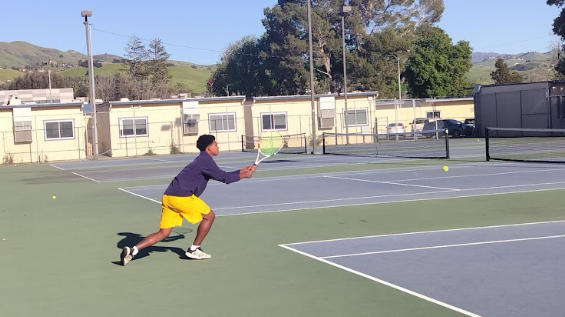
Being an athlete takes an incredible amount of discipline and hard work. Being an athlete while fasting takes even more. Last month, Muslim student-athletes were among those around the world who fasted during the holy month of Ramadan.
Mohamed has been playing tennis at MHS for three years, he said. The first time he fasted during tennis season for the entirety of Ramadan was his junior year, he added.
“It may seem like there’s a lot of pressure,“ senior Ibrahim Mohamed said. “But when you begin to enjoy the process, it’ll feel less challenging, and your brain will feel better overall.”
Mohamed has been playing tennis at MHS for three years, he said. The first time he fasted during tennis season for the entirety of Ramadan was his junior year, he added.
An encouragement that gets him through challenges during Ramadan is knowing that others around the world are also going through the same experience, Mohamed said.
“My team has been really supportive,” he said. “Whenever we go out for a bonding event, they make sure we go to a place with halal (acceptable in Islam ) food so I can break my fast. Usually, they’ll give me snacks and water at the end of practice, which is amazing.”
This year was senior Awab Ibrahim’s second time fasting while competing for track, he said. His events include 300-meter hurdles, 400-meter hurdles, and the 4×4, he added.
“I definitely realized I can’t fully compete in all the events I want to with full energy,” Ibrahim said. ”I remember I did a 400-meter race during a scrimmage and was completely drained after. If I had been doing any other event, I wouldn’t have been able to do it because I barely had energy after that one race, so doing multiple events has definitely been hard.”
While being suggested by coaches to be cautious or work less during practices, Ibrahim has never given up during or on a workout, he said. His coaches have also been incredibly supportive during track season, giving him time and space to break his fast during practices, he added.
“There’s been days where I’ve had to break my fast without going home, and one of my coaches has given me dates that he carries with him to break my fast,” Ibrahim said. “There’s been one race day where I had to break my fast, and that was the day I brought a couple of snacks with me, and an electrolyte drink that I have mid-race.”
Junior Mishael Shaik fasted this year for the first time ever, she said. She has been playing
badminton since the age of 12, and this was the first year she experienced a dramatic change in her energy levels while competing, she added.
“My parents told me that I would be really tired, and that they didn’t think that I could manage it,” she said. “But I really wanted to try fasting at least once, so I tried it this year. The hardest part was definitely waking up at 4:30 to break fast and not drinking water during the day.”
Shaik depended on breaks during conditioning in order to get through more intense practices, she added.
“I remember I was playing in a game against Homestead where I should’ve won, but I ended up losing in just two sets,” Shaik said.
Coming back to badminton after Ramadan made her notice a large improvement in skills and stamina, Shaik said.
“For Muslim athletes who maybe are just starting to fast, I would say don’t push too much if you can’t handle it,” Shaik said. “I’m proud of everyone that fasted, and for pushing through the difficulty.”