
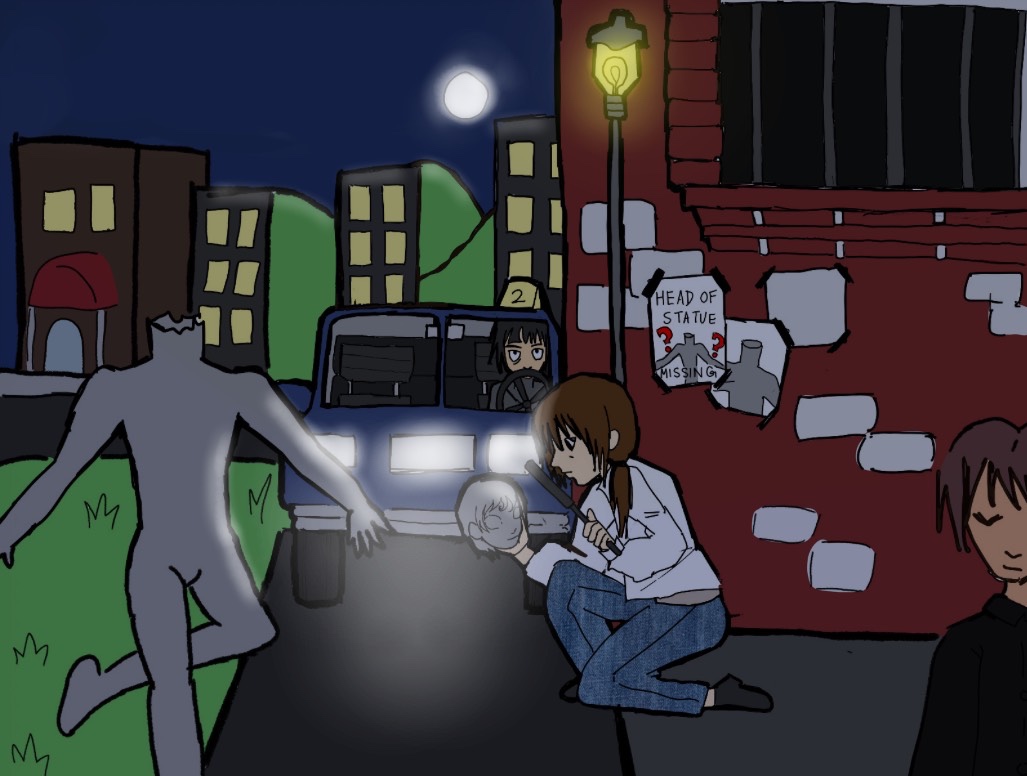
While some people enjoy watching criminal detective shows or true crime documentaries, others actually plan to solve these crimes in real life, as a career. Forensic science, one of the many science courses offered at our school, can bring the experience of solving crimes to life.
In the yearlong class, students learn to collect evidence at a crime scene and analyze that evidence, forensic science teacher Huy Pham said. During the first semester, students learn about different types of crimes committed and inferences that can be made when looking at a crime scene, he added.
“In the second semester, it’s more about the science behind the evidence that we collect, going over it, analyzing it, and collecting the evidence through science school,” Pham said.
Junior Haashini Balamurugan is taking forensic science this year, she said. The class has been her favorite subject, she added.
“I have first period, so I just walk in in the morning, and then we talk about pretty brutal stuff, but it’s really fun,” Balamurugan said. “My favorite unit so far has been fingerprinting. We recently did a lab on dusting for fingerprints,so that was really fun.”
Balamurugan developed an interest in forensic science when she started reading crime novels in middle school, she said.
“I started becoming fascinated with the different techniques they use to analyze evidence and present it to court,” Balamurugan said.
When senior Kimberly Pasqua took forensic science in her junior year, one specific skill that helped her do well was to pay attention to details, she added.
“There’s so many things you have to pay attention to that you won’t catch unless you’re trying to look for it because you don’t see something, unless you’re specifically looking for it,” Pasqua said
Pasqua wants to be a forensic technician, which means she analyzes evidence in the labs, she said.
“I don’t think I would be able to actually go to the crime scene, but I still want to be involved somehow,” Pasqua said.
Balamurugan is considering many different options, but is currently focused on criminal prosecution, she said. If that doesn’t work out, she wants to be a medical examiner, she added.
“When you prosecute criminals in court, or prosecute someone who’s been convicted of a crime in court, you try to prove that either they committed the crime, [or] the defense’s job is to prove that they didn’t commit the crime if they say that they’re not guilty.” Balamurugan said. “The job of a medical examiner is to perform autopsies on anyone who’s died. That could be in the case of a homicide, that could be in the case of just someone dying of natural causes. Their job is just to figure out what caused them to die.”
One of the guest speakers that visited the forensic science class was a medical examiner, Pham said.
“She talked about how to identify the cause of death of the individual,” Pham said. “She had a medical degree, license, and then she talked about what she does for her job. Then she’d show us some case studies with pictures.”
Media about true crime and murder mysteries aren’t the most accurate in depicting actual forensics, Balamurugan said.
“They’re somewhat accurate,” Balamuruguan added. “They give you an introduction into what the field is like.”
