
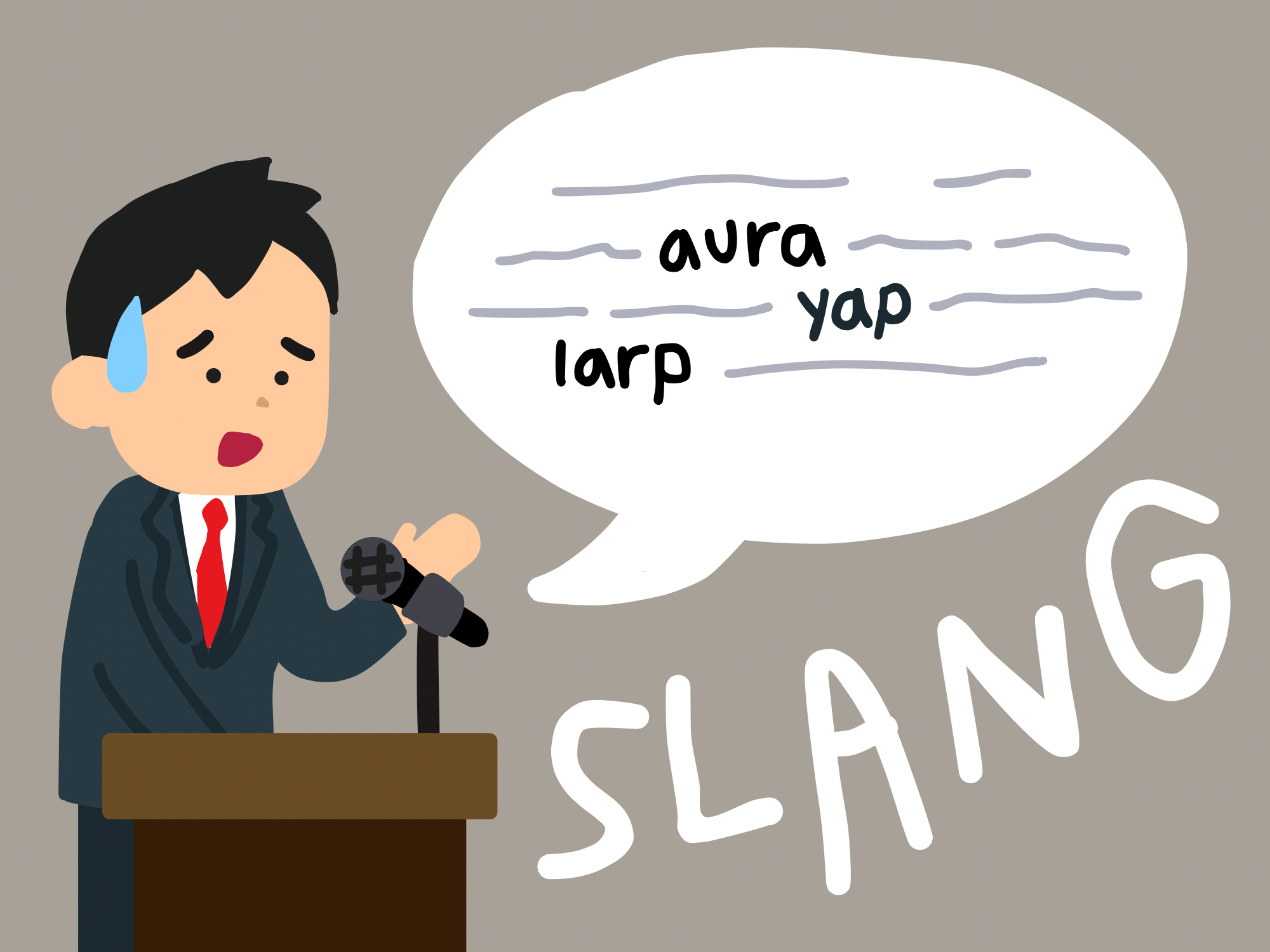
Lately, you might’ve heard or seen the word “LARP” on social media, but do you know what it really means? Traditionally, the term simply stands for Live-Action-Role-Play according to the Urban Dictionary. However, it has recently risen in popularity through social media, becoming reshaped into mainstream internet slang. The use of this type of slang raises the question: Will newer modern media slang hinder our capabilities to converse properly in the future?
People used the term to describe communities of people coming together and roleplaying as video game characters as if they were in the game in real time. Coined in the 1970s, people used “LARP” to describe bringing games to life, such as Dungeons & Dragons.
Although some people still use this definition, its newer meaning has recently outshined it by introducing a definition that can be used in a much simpler way. The Urban Dictionary defines the slang, “larp” to mean copying or pretending to be something or someone.
As youth access to social media continues to increase, so does the exposure to modern media slang. Social media uses formulated words such as “larping,” with the word “larp” by itself branching from the original acronym. This evolution of slang becomes one of the first steps to fragmenting our ability to communicate properly.
All over the Internet, “larper” has been widely used as an alternative to the words “poser” or “faker.” It has been most commonly used by teenagers to call out people for pretending to be something that they aren’t, with one of the most common archetypes being a rich person.
According to a study conducted by Mary Kate Sturgeon, slang is commonly used because it allows people to talk more casually and its usage relies more on context than textbook definitions, being understood more by people actively on social media. However, the need to understand context when slang is thrown out in a conversation creates barriers to human conversations because the other person may have no idea what you are talking about. Its usage also defies the standards of English, as shown through the word “larp”. While slang can allow for simpler usage, it also hinders our capabilities to have formal, genuine conversations. If younger generations lack in understanding how to speak formally, they risk not knowing how to talk during job interviews, work meetings, etc.
To dive into why the word larp has become so popular, we can take a look at the most followed Twitch streamer in the world, Kai Cenat. Around early 2026, Kai Cenat begun releasing videos about a “self-impovement” journey, where he appeared to be taking a break from his regular chaotic daily streams to focus on himself. Many users widely accused him as a performative “larper” simply because they felt as if he was trying to fit in with “regular” people, attempting to mask the reality of his growing fame.
It’s no doubt that social media slang introduces simplicity in our conversations, however it also destroys one of our strongest abilities involving critical thinking. It is said that humans are the most intelligent species on Earth, but it’s difficult to believe that since we live in a world where we deconstruct the foundations of formal conversation for lazy slang that becomes irrelevant after a few years.
