
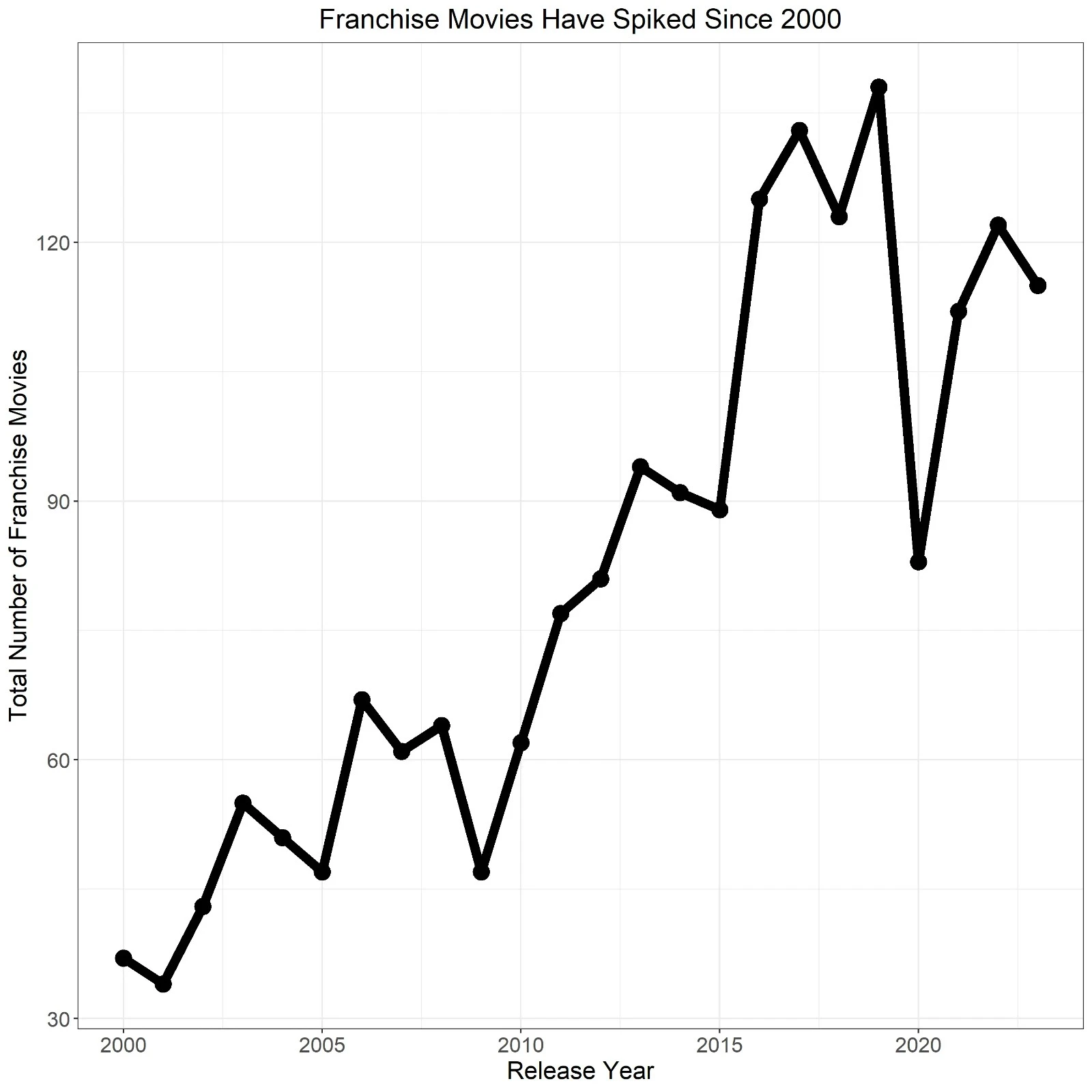
Modern movies have been becoming increasingly serialized; every other new production seems to be another sequel, prequel, or minorly edited iteration of an old story. This overfranchisement has led to a disturbing amount of repetition in the film industry that has made entertainment less enjoyable for consumers.
By their nature, franchises must be created by the same producers or copyright holders and feature the same main characters in the same universe. As a result, directors, writers, and producers feel no need to come up with new storylines; if almost every other aspect is near-identical in a franchise, why should the plots differ?
Directors and producers already know what works for their audience, so they simply reuse the same themes without any attempt at creativity. Characters that do not have any remaining potential for growth continue to be featured because audiences have formed connections with them that directors can profit from. “Necessity is the mother of invention,” and with filmmakers no longer needing to attract new fans, they do not bother to invent fresh, exciting plotlines.
This repetition bores viewers and limits the scope of media. Most mainstream modern-day films have been franchised, and the lack of original plotlines or new characters to keep viewers on the edge of their seats has left them fatigued by the never-ending iterations of the same story. Franchises like the Marvel Cinematic Universe (MCU) carry some of the most mainstream productions in today’s film industry and are advertised to an almost exclusive extent. One shouldn’t need to work to enjoy their entertainment, but there is an extremely limited variety of films available for viewers desiring a fun modern action movie apart from the MCU that wouldn’t require a painstaking search.
The use of the same characters necessitates the same actors, who often become branded by their franchised roles. Tom Felton was a child when he played Draco Malfoy in the official “Harry Potter” movie series adaptations, but after such a prominent role that lasted so many years and films, it became extremely difficult for audiences and directors to see him as anyone else. Felton couldn’t have known that the job he took at eleven years old would determine the rest of his career, but despite his many auditions for heroic characters and loud protests against typecasting, practically every other character he was chosen to play mimicked Malfoy’s villainous attitude.
