Senior year is often a stressful time for students as they decide what they want to do in their future. Many students follow the traditional path of attending a college or university, but some are determined to forge their own paths.
Senior Marksonkid Pham plans on taking an apprenticeship for either carpentry or to become an electrician, he said.
“The easiest (path) is to take an apprenticeship where I get paid and do a part-time job where I both learn the safety skills, the functioning skills, all the regulations from a trained person of the trade specifically,” he said. “After that, I would take the journeyman test, which basically tells the state of California that I am who I am, and I understand the concepts of my trade, and that I’m trained in that trade specifically.”
Pham is leaning towards becoming a carpenter because he enjoys building things and is already familiar with some power tools, he said.
“I mostly helped my dad with at-home projects,” he said. “I helped him create a frame for our shed, which we then took down not too long after because we had to move. I also helped out in the MHS ‘Clue’ production, where I helped make the flats and helped paint some of them.”
Along with an apprenticeship, taking classes at a night school is needed for the journeyman test, Pham said.
“It (night school) is mainly just a lot of refresher, a lot of ‘by the book’ stuff,” he said. “So I learn from the job site. I learn a lot of the etiquette, a lot of the skills that they don’t teach in the book. And I read from the book to understand regulations, requirements, minimums, and certain methods to do things that maybe say a master of the trade would do differently.”
Pham was inspired to pursue a trade after realizing in junior year that he hated sitting in a classroom doing paperwork, he said.
“I learned later on that, ‘Oh, I can just pursue a trade, which is a lot of handy work,’” Pham said. “I can see things change actively instead of sitting behind a desk or being in a classroom all day.”
Senior Emily Hale Carrillo is planning to go into a blue-collar profession, she said. She wants to either become an HVAC or sheet metal technician, she said.
“A big part that inspired me was when I was a sophomore, I was thinking of what I wanted to do after high school, and nothing really caught my attention that I would have to go to college for,” Carrillo said.
However, Carrillo was interested in working on construction sites and other blue-collar jobs, she said.
“A lot of the blue-collar jobs are a foundation to a lot of architecture, and not a lot of people really know about (that), and it just seemed really interesting to me,” Carrillo said.
For now, Carrillo is leaning more towards becoming a sheet metal technician, she said.
“What I’m likely going to do is try sheet metal for a few years, and then try to swap over to HVAC,” Carrillo said. “Once you’re in the trades, or whatever union, it’s very easy to swap over to another trade if you would like.”
Carrillo recommends that others get a blue-collar job because hands-on trades cannot be replaced by AI, she said. These careers also make good money, she added.
“It’s still school, but a lot of these blue-collar jobs and trades are often overlooked because the traditional college route is pushed in the minds of a lot of young high schoolers,” Carrillo said.
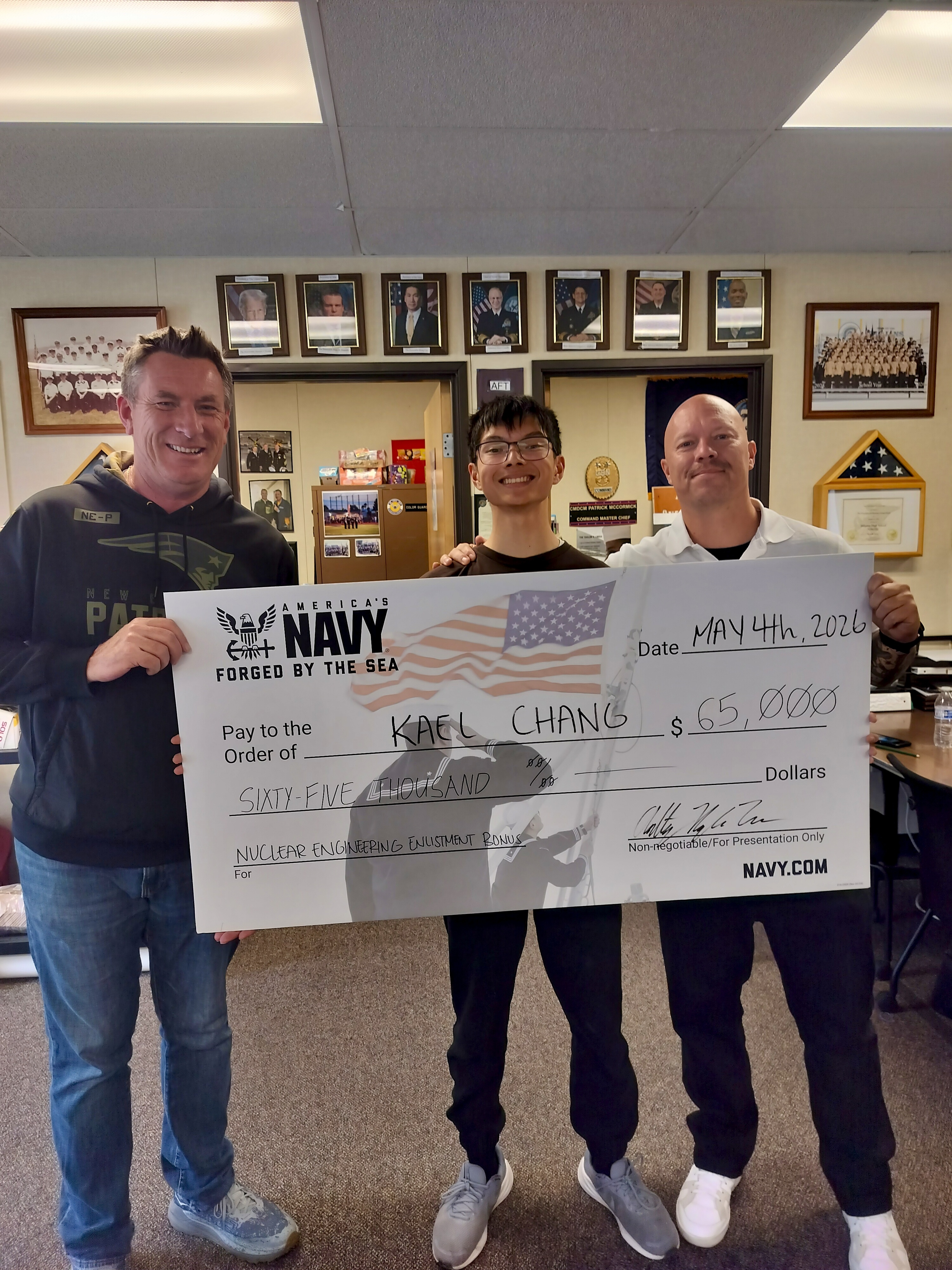
Senior Kael Chang has been in ROTC for eight years, he said. He plans on joining the Navy to become a Navy Nuke, which is similar to nuclear engineering, Chang said.
“I hope from this experience in the Navy, I can take that outside into the civilian world, especially in this ecosystem where energy is very important, with data centers and all this focus on tech,” he said.
Chang wants to pursue a Bachelor’s of Science in marine biology but chose to become a Navy Nuke to help him find a secure job, he said. The Navy has its own college, including a program for Navy Nukes, Chang added.
“They (the Navy) call it Nuke School, and they basically condense all of the things you need to know to run a nuclear power, not a nuclear reactor, in two years,” he said. “And they give you enough credits that you can almost finish a nuclear engineering degree.”
Chang believes that it’s important to try new things, especially if you’re scared of them, he said. Joining the Navy wasn’t an easy decision, but as long as you try, you will learn from the experience, he said.
“Even if the first time is scary, you’ll see what scares you, and then you can figure out how to deal with that,” he said. “And then you give it a second try, and then the second try is easier, and
then the third try is even easier, and then you adapt to it. As a senior going on to the real world, if you don’t adapt to your situation, you will fail and you will peak in high school.”
Seniors forge own paths to success