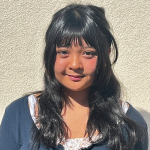
MHS is home to a great diversity of students and faculty, whether that has regard to culture: Each person has their own story to tell. There is no doubt that any person would be able to find people of every culture from MHS, including first-generation immigrants.
Math teacher Wai Lan Tsang moved from Hong Kong to the United States because her then-boyfriend, now husband, had immigrated here to attend graduate school, and she decided to move with him after they got married, she said. Moving to the states was quite hard, and being so far away from her loved ones had drastically changed her relationships, she added.
“My mom cried the first time that I visited the U.S., when I wasn’t married yet,” Tsang said. “But then the year before I got married, I came here (the U.S.) to visit my boyfriend. At that time, she had already started crying. She was very upset.”
Initially, it was hard noticing any significant cultural conflicts or differences in the States up until she started working or teaching, as the majority of international students and in her work environment were Asian, Tsang said. After graduating and gaining her master’s degree in computer science, she worked as a software engineer, she added.
“At my first two jobs, the majority of my co-workers were mainly Taiwanese, so I didn’t see a big cultural difference and at my second job, the majority of my team was from mainland China, so I didn’t feel a big cultural difference, either,” Tsang said. “It’s just that I needed to adjust my Mandarin from the Taiwanese tone to mainland China tone. Not until my last two companies, there was more diversity. But still, the majority are Asian. It’s just changing from Chinese to Indian people.”
Sophomore RaizelLee Sharpe moved from the Philippines to the U.S. with her mother when she was eleven years old, Sharpe said. Before moving to the U.S., Sharpe and her mother lived with her grandparents, she added.
“Duterte was still in the Philippines while I was there, so my mom was not getting paid really well,” Sharpe said. “It was not enough, as her wage was not enough to basically allow her to have her own house. She decided to move to the U.S. to get a better job and to have a stable future. She also wants what’s best for me, so I can have a better future.”
Initially, Sharpe had moved to Iowa before she and her mother relocated to California, Sharpe said. Iowa’s population mainly consisted of black and white people, and its social life and culture were extremely different to the one in the Philippines. At times, she would receive backhanded, racist comments, she added.
“I couldn’t find anyone who was like my people, so I felt out of place,” Sharpe said. “When they saw me, they were like, ‘Oh, what are you? Are you Mexican? What kind of Asian are you?’ And then I’d tell them that I’m Filipino. They’re like, ‘You’re not Filipino. You’re Asian.’ And then some people would tell me, ‘Oh, you’re Indian,’ or ‘No, you’re Mexican,’ or ‘No, you’re Chinese.’ And then sometimes they would call me slurs.”
Sharpe would not move back to the Philippines if she had the chance, as it is still a very unsafe and unstable country, she said. She moved to the U.S. for a better future, she added.
“The Philippines is a third-world country, so it just doesn’t have enough opportunities for people and students,” Sharpe said. “Education is harder to find, since you at least have to be rich to attend school. Some kids my age didn’t even go to school. So I’m one of the lucky ones who got to go to school, and school in the Philippines is separated. It’s separated into grade A, grade B, with grade A being the smartest, and grade B being the bad kids. Nobody deserves to be labeled that way.”
Sophomore Kavya Karthik moved from India to the U.S. when she was 9 years old after her mother was given the opportunity to live here because of her occupation, Karthik said.
“The Bay Area is really similar to where I lived in India,” Karthik said. “I think one of the biggest differences between the Bay Area and where I lived was that everyone goes to private schools, and the Indian curriculum was probably harder. I was still pretty young, so it wasn’t that hard.”
Before moving to the States, Karthik lived in Bangalore, “the Silicon Valley of India,” she said. Bangalore was and still is very diverse, so students and teachers decided to speak to each other in English, she added.
“Bangalore has kids from pretty much all over India, and every state in India basically has a different language,” Karthik said. “So just in my apartment alone, every single one of my friends spoke a different language, like at home.”